
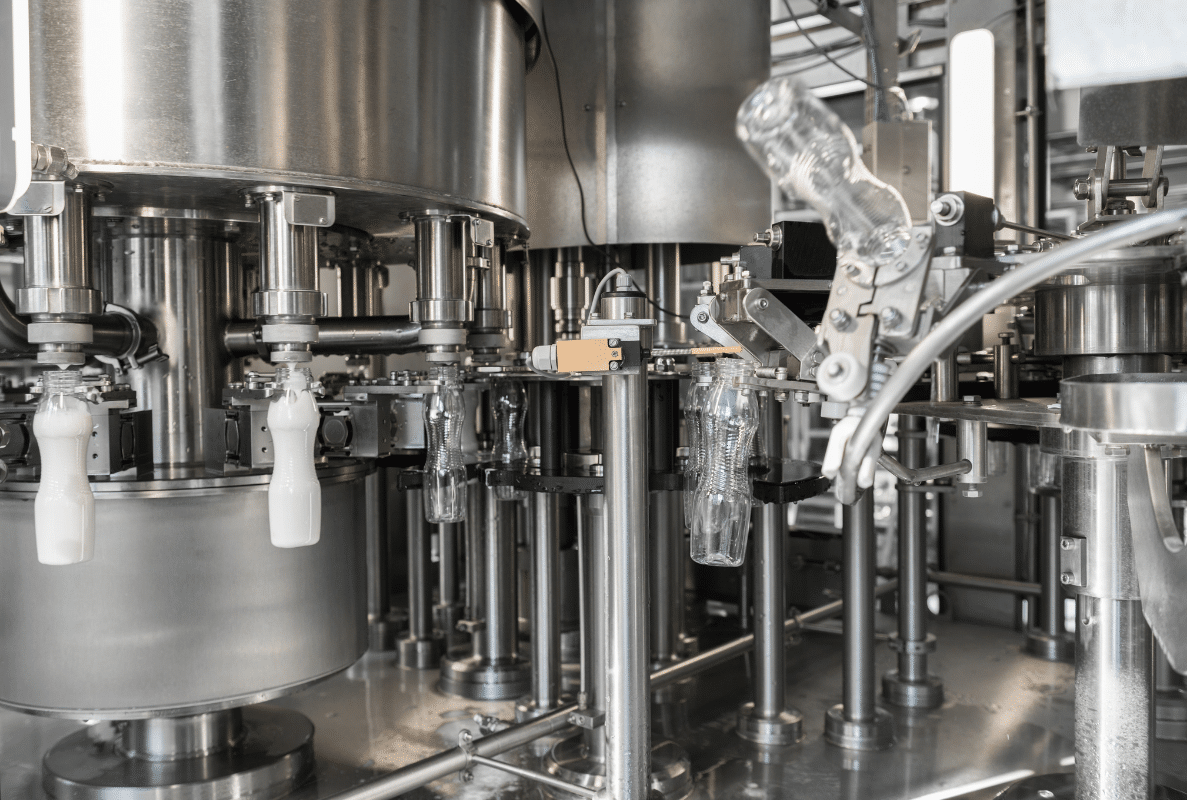
For many operations managers, it’s just another piece of equipment on the production floor, and it rarely gives anyone a sleepless night. It should, however, as there are far too many scenarios where an organization purchases industrial mixing equipment that is “good enough,” runs it for six months and then begins to have performance issues. Product consistency varies, energy costs increase, maintenance seems to call more often than before, and before you know it, good enough has cost the company thousands upon thousands of dollars.
Industrial mixers aren’t one-size-fits-all. The right mixer for one application might be completely wrong for another with only small variances between the two to make something that disastrous. But it’s too late when companies realize they’ve made a poor choice and that operating costs for long-life mixing equipment exceed initial purchases exponentially.
How the Mixer Works Behind the Scenes
Mixer technology requires greater engineering considerations than many people realize. Industrial mixing equipment isn’t just a large vat that spins and swirls material about; it creates specific flow patterns, shear forces, and turbulence that dictate whether or not effective mixing occurs.
Low-quality mixing equipment swirls material from one area to another but doesn’t promote effective integration. Hot spots occur, unmixed pockets fail to get processed, and people assume that because the components are swirling, mixing is occurring. If only it were that easy.
Quality mixing equipment maintains flow patterns that bring material from the bottom and from the walls into the center of the action. Various components, the design of the impeller blades, tank geometry, and shaft positioning, all promote and reduce flow through established placement. When companies partner with reputable industrial mixer manufacturers, they create solutions for clients with this understanding upfront rather than an off-the-shelf version that moves at a standard volume.
The Viscosity Application Most Don’t Acknowledge
Here’s the kicker: Most materials are subjected to processing changes in viscosity. A product could start thin, ramp up viscosity as heat creates cohesion, and dissipate an ultimate mixing agent as temperature increases again. Without proper equipment to accommodate both ends of the spectrum, and everything in between, companies spend too much time and energy trying to compensate after the fact.
Standard industrial mixers are set at a viscosity range with little cross-over ability. If viscosity is constant throughout the entire process or if all components are added simultaneously with enough time in between for cohesiveness to kick in, there aren’t any issues. However, if process requirements mean that material viscosity changes drastically throughout mixing but the equipment cannot switch accordingly, mixing turns sub-par. Motors slow down under the strain because even if it’s moving at full speed, inlet devices can’t process material quickly enough to maintain operational integrity. Quality control slips when companies run mixers longer to compensate for poor mixing, additional energy use also decreases throughput.
Quality mixers made for extended versatility have varying impeller designs and more powerful drive systems capable of effective mixing whether they’ve got thin materials like water or thick products like peanut butter. The payoff comes down the line when companies are no longer limited to inconsistencies across materials which boost input costs but small batches of less than stellar results.
Material Compatibility Problems
Different materials respond differently to shear forces. Certain products rely on less shear force in a blend to prevent degradation while others need higher dispersion force to break down clumps or achieve integration. Mixing at an inappropriate intensity relevant to your materials results in quality concerns that no one knows how to trace.
For example, if your ingredients are fragile and require gentle ingredients to avoid breakdown but your mixer has an aggressive approach with too much mechanical force, you’re literally destroying components in your final product while missing out on key component advantages. To the eye, your final product looks fine but stability and texture will yield poor performance results.
On the other hand, certain materials require high shear through vigorous blending. Powders that lump together or materials that sink require additional blending capacity. If mixers are too gentle, inadequate dispersion exists with poor results.
The best approach is to blend at the appropriate intensity for material requirements, which means knowing what yours need and selecting equipment capable of providing it.
Energy Draw None Calculate Properly
Here’s where most people get blindsided: energy costs associated with mixers increase dramatically. An ineffective mixer is going to draw anywhere from 20-30% more than a well-designed mixer doing its job; over the course of a year of constant energy draw, that’s considerable.
But energy draw is rarely a consideration when people are purchasing mixers. They note initial cost projections and physical dimensions and operate one year later before noticing how much power it’s pulling. Efficiency in terms of design reductions fails energy draws through improved impeller geometry and rotational speeds optimized through effective flow patterns reduce dissipated effort across components without a lower friction loading effort that carves into additional anticipated costs.
It’s not always how well the motor works but how much effort it exerts that’s unnecessary; when effective dynamics are presented, energy costs drop significantly.
Maintenance Expectations – Reality vs Expectations
There isn’t a piece of industrial equipment that can run day in and day out without ever seeing a scrap of maintenance; however, some technology demands more extensive maintenance than others while straggling along after-years with limited maintenance needs.
Some mixers have seals replaced every few months while others can run for years without maintenance. Where does this come from? Component selection and engineering quality.
Cheap mixers include cheap seals, bearing supports and shaft strengths which wear prematurely under industrial conditions when replaced parts aren’t readily available and down time extends until replacements are acquired. Initial savings are lost in acquisition quickly when maintenance occurs far more often than anticipated with thorough down times, which are easy to neglect when replacements aren’t held in-house.
Well-designed mixers utilize commercial-grade components rated for extensive duty while seals are tailored to your needs and application conditions.
Scalability Impacts More Than You Know
Most operations scale over time with increased volume productions, new product lines and manufacturing that adjust according to business needs and demands from customers. Your manufacturing equipment needs to maintain most expectations without complete replacements needed.
Fixed-speed devices at certain capacities force operations to run batch after batch as demand scales or invest in additional units or limited capabilities; none offer scalability support especially when you want to grow now without wasting time on effective operations previously.
Variable speed mixers with oversized motors possess adjustable mounts made over time for efficient operation without needing complete replacement; adjustments can be made based on intensity for differentiated formulations with additional capacity while processing characteristics can be adjusted based on potential without seeking new equipment altogether.
Making the Right Choice
Choosing your industrial mixer isn’t about finding something that stirs; it’s about matching specific engineering criteria relative to your application requirements. Materials makeup characteristics versus viscosity capabilities; drive systems dependent upon energy expenditure and maintenance expectations all factor into a decision based on initial pricing differences between “good enough” and “quality.”
The projected upfront price difference between good mixers and quality mixers often seems steep with no offset; however, when calculated over ownership potential, including energy consumption, maintenance costs/labor, down time/resources spent repurposing sub-standard batches, the numbers make sense because it’s typically within quality’s favor to pay for itself through more consistent efficiencies combined with reduced operational costs.
Good quality includes good value; taking the time to properly assess what makes sense relative to true performance expectations instead of an upfront estimation means better quality across daily operations now, and for years to come, as the mixer choice made translates into production efficiencies for better quality output versus increased operating costs over annually assessed options a long time down the road.
- How to Build a Sustainable Culture of Internal Promotion and Growth
- A Beginner’s Guide to Safely Clearing Personal Data Before Rehoming Devices
- Creating a Healthier Work Environment: A Guide for Facility Managers
- How to Optimize Your Dental Practice Website for Better Search Visibility
- 7 Essential Features Every Modern Fitness Center Needs to Succeed