
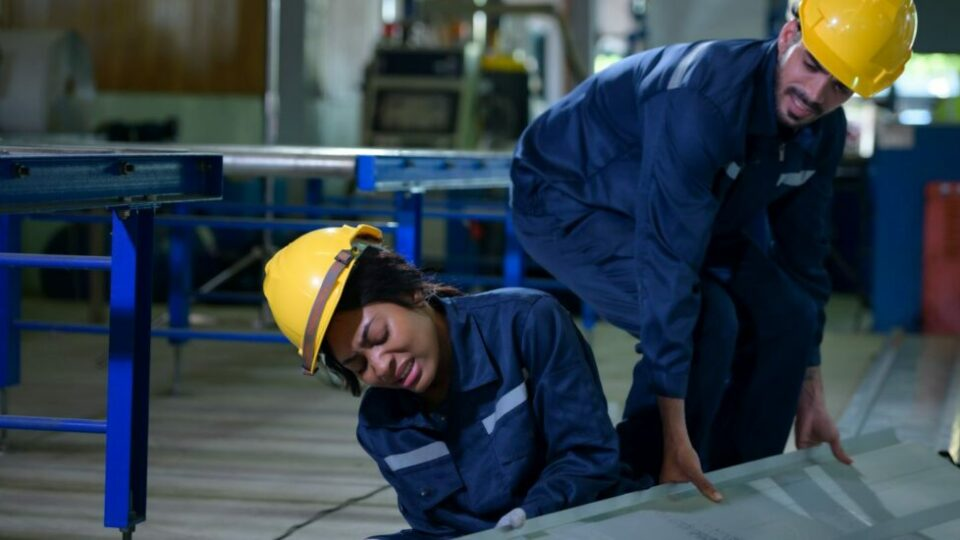
When material clings to conveyor belts and falls to the floors and structures, many people perceive it as a housekeeping problem. A bit messy, sure, but mostly a maintenance issue. That’s a surefire way to put people at risk.
Material carryback and accumulation create legitimate safety risks. It’s just that they don’t present themselves the same way other hazards do. They sneak up on people, building critical mass, waiting for the opportune moment to cause a problem.
Walking Surfaces That Become Dangerous Over Time
Material doesn’t fall to the floor all at once. Instead, it falls little by little, each shift, and collects on walkways and platforms that people traverse daily.
It’s the slow accumulation that makes it risky. People become accustomed to it. They know which part of the walkway to avoid because the footing is slippery. They know they need to walk around a corner, but then meet with someone else since they’re used to the limited space since they’re going a little faster, but then someone rushing is thrown off by the situation and the small combination of material in front of someone else gives way to consequences.
Add water to the mix and things get worse fast. Material that is merely inconvenient when dry is substantially slippery when wet. Coal dust, many mineral products, fine aggregates—these become skating rinks with a little bit of water on them.
And what’s more, material accumulates and covers other materials. Uneven floors, small trip hazards, small breaks in walking surfaces; all of this gets hidden under accumulation and creates surprises for anyone traversing those areas.
Weight That Structures Were Never Designed For
Conveyor support structures are designed for a certain amount of loading. The weight of the belt and whatever is processed is taken into account along with drive components.
What is not taken into account is the additional weight from material that sticks. To a person on their own, a couple of kgs per square meter here or there isn’t much. However, apply that across ten meters of conveyor where everything is stuck to the belt, held within the idlers, blanketed onto the structure frame and settled in any collection spots throughout.
Steel can be strong but steel under continuous stress it was never designed to withstand takes its toll. Connections designed for stress show signs of fatigue. Welds break. Bolted joints loosen. This doesn’t happen overnight—hence why it’s so unsuspecting.
Even more so, when things get taller, load distribution becomes increasingly relevant on unsupported structures. Accumulation is not accounted for in terms of how forces distribute themselves through a framework.
When Dust Becomes Fuel
Certain products combust when they’re in particulate form or when dust becomes concentrated enough. Coal gets much of the press for such combustion capabilities, but many other industrial products—certain minerals, agricultural goods, even some processed products combust with relative ease when the right circumstances meet them.
Accumulated material serves as a fuel bank along its conveyor path. Meanwhile, normal operation provides ignition sources—friction from a misaligned belt, heat from a seized idler bearing, electrical component that shorts out—any of these combined with increased combustible material creates fire.
This is where the support of specialized cleaning equipment works; cleaning systems like conveyor belt scrapers remove the material before it has a chance to accumulate and serve as fuel banks along the trajectory of conveyance.
If combustion occurs, it follows along where the material spills out of the conveyor to walkways and return galleries, anywhere else where material accumulates over time. In confined places (like tunnels), this is particularly troublesome as ventilation is limited with heat that subsequently concentrates as opposed to dissipates.
Moving Parts That Stop Moving Right
Material works its way where it shouldn’t be. Idlers get stuck because they’ve been jammed full of enough material that it can’t move anymore. Pulleys collect enough material that they misalign tracks which shifts belts sideways so they rub against structures or get pinched.
What’s risky about this is its unpredictable nature—an idler can accumulate buildup and still spin for three weeks until all of a sudden it locks up. A belt may be tracking fine through whatever interference it has until one change in temperature or moisture throws everything off.
Even more so, where emergency systems are concerned, material can build up around emissions or give unnecessary momentum to areas that should have stopped; delayed reactions between emergencies and response can create accidents.
Visibility Issues From Dust
When dry materials are disturbed—either through operation or cleanup—they create dust clouds and haze where visibility becomes constrained for everyone working in that area.
It’s harder for equipment operators to see. It’s harder for workers to see hazards or safety signage.
In confined areas, when disturbed dust occurs from accumulated material, it’s virtually impossible to see at all for nanoseconds at a time. That’s often long enough to walk into something or for an equipment operator to no longer see what operator where.
Materials become hidden as well from accumulation; safety signs get covered with material; color-coded zones become layered upon by what appears to be generic accumulation; moving parts become difficult to gauge when everything is coated with material, it’s hard to gauge how far the edge of a belt is or how close that pulley actually is from a frame.
Cleaning done by maintenance workers creates dust when they happen to be closest to moving equipment and potential pinch points as well.
Tight Spaces Bring Added Risk
Many safety protocols during normal conditions exist in tunnels or chutes or transfer points and confined areas. Material build-up makes confined areas exponentially more hazardous.
Usable space shrinks as build-up occurs; footing becomes more precarious if at all—and when it gets cleaned up finally disturbed dusty accumulation occurs in confined spaces that’s even more concentrated since it has nowhere to go.
When workers enter confined areas for cleanup, they face many uncertainties at once—increased material weight of whatever accumulates very rapidly compounded by poor air quality due to dust plus forced vicinity near equipment that may not even be locked out.
Some materials create explosive conditions where dust reaches certain concentrations—it rarely happens in open areas because dust has room to spread; however in confined spaces it can reach dangerous levels before anyone knows it exists.
Inspections Become Guesswork
Inspections are meant to occur regularly so problems don’t occur before they become failures—but nothings assessed through visual inspection through material build-up. Welds and connections either need adjustment or repairs; wear surfaces need routine assessment; condition materials need consistent looks—but all these are hidden underneath an accumulation.
Problems develop out of sight under risky conditions—a weld crack that needs attention before repair gets unnoticed because it’s hidden by material caking on top of it while excessive wear gets compounding attention because it’s unseeable until it’s seen.
Cleaning up for inspections seems like an obvious solution; however this creates problems as well because it means infrequent cleaning after excess build-up gets shoveled away which is riskier than dealing with small amounts frequently.
Stopping Them Before They Start
The easiest resolution is preventing build up instead of preventing it after it occurs—and belt cleaning systems that work effectively can remove material before it gets carried back and deposited where it shouldn’t be.
Tiered cleaning systems clean at different stages; primary handles bulk amounts right at discharge points while secondary options handle residual finer materials—when these options are strategically positioned and properly maintained they prevent most of carry back which leads to problematic build-up.
The key is viewing cleaning systems as safety systems as opposed to maintenance systems—they require checks as well as timeliness to worn parts replacements and proper adjustments while allowing them to slide puts material past them and begins the build-up process all over again.
Why This Should Be a Safety Focused Hazard
Material accumulation isn’t inherently found on typical safety audit checklists—it’s not an obvious hazard like missing fall protections or exposed machinery pieces—but it’s the type of condition that occurs due to inadequate observation which makes incidents appear which compile incident statistics over safety achievements.
Operations that believe this is merely housekeeping tend to let this slide until its overwhelmingly problematic while those who engage this action as safety concerns—a slip hazard fire risk confusion emergency situations during inspections—they tend to invest more readily into solutions while more quickly resolving solutions when they do occur.
This is an avoidable hazard; it takes appropriate prevention with cleaning systems and consistent attention toward removal before complacency allows something that merely looks like a mess transform into conditions for disastrous problems.
- How Early Education Shapes Long-Term Wellness Outcomes
- Why Philanthropy Should Be Part of Every Curriculum
- How to Build a Sustainable Culture of Internal Promotion and Growth
- A Beginner’s Guide to Safely Clearing Personal Data Before Rehoming Devices
- Creating a Healthier Work Environment: A Guide for Facility Managers